
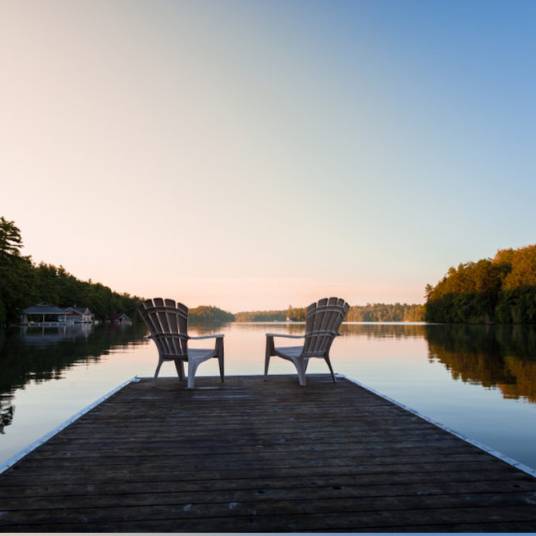
Lake Rosseau
History & Information
The connective heart of Muskoka’s most prestigious cottage country — 150 years of history, exceptional water quality, and a real estate market unlike any other in Canada.
The Middle Lake That Ties Everything Together
If you’ve spent any time researching Muskoka real estate, you know that Lake Rosseau isn’t just a body of water — it’s a landmark. As the “middle child” of the Big Three (sandwiched between Lake Joseph to the west and Lake Muskoka to the south), Rosseau is the connective tissue of the region’s most prestigious cottage country.
But Rosseau has its own specific gravity. It’s a place where 100-year-old family legacies sit alongside some of the most impressive modern architecture in Canada. To understand the real estate here, you need to understand the history that built it — and the water quality that makes it worth preserving.
Waanakiing — The Place of the Big Water
Long before the first Victorian “summer person” stepped off a steamship, this area was known to the Anishinaabe people as Waanakiing — roughly translated as “the place of the big water.” For generations, the Indigenous peoples of the Muskoka and Parry Sound regions used these waters for travel, fishing, and sustenance.
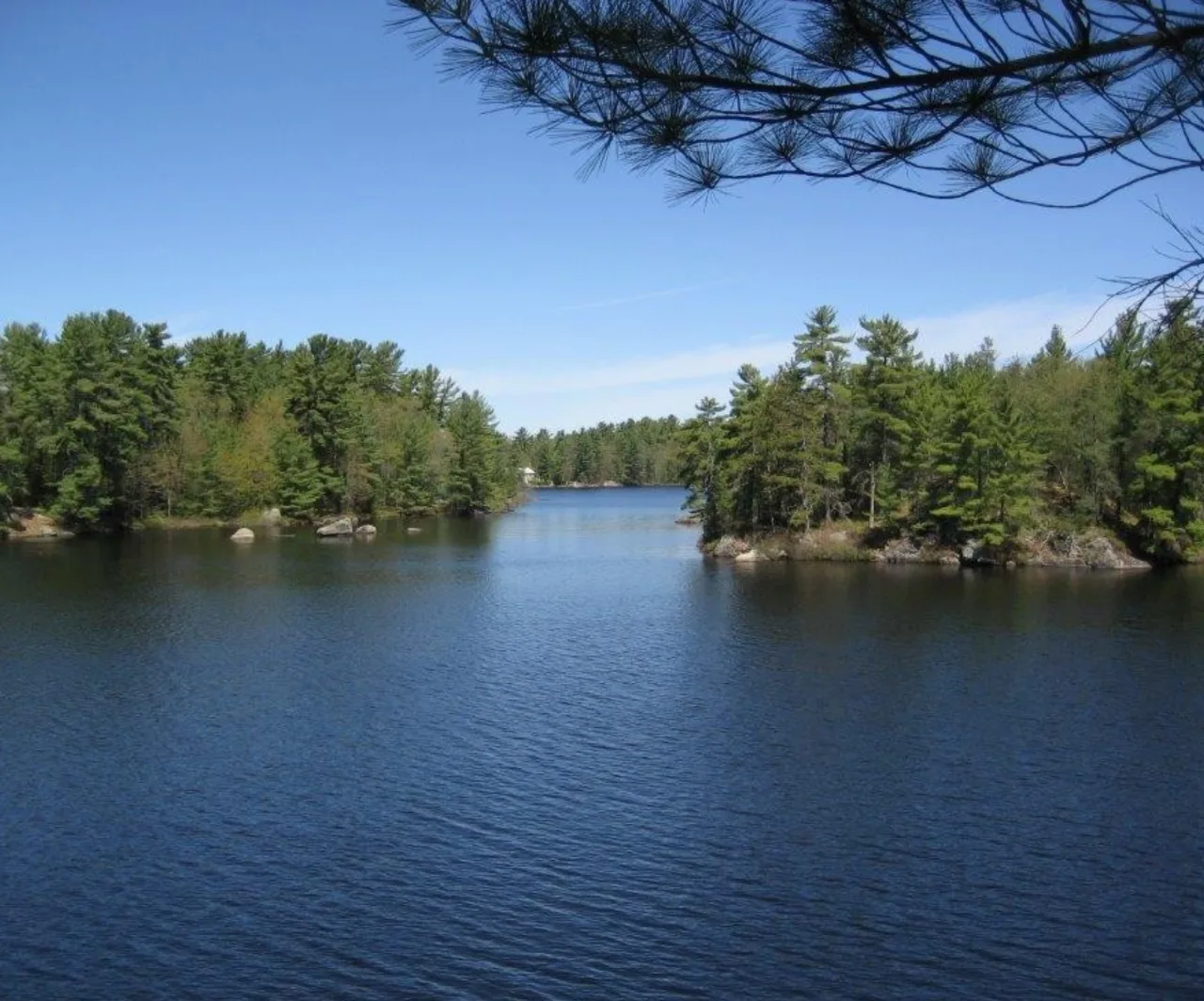
When you’re out on the lake today, running the granite shorelines and watching the pines reach over the water, you’re seeing the same landscape they protected for centuries. The “wild” feeling that draws buyers here is not accidental — it’s the result of land and water that was treated with care long before cottage country existed as a concept.

The Steamship Era — When Cottaging Was an Event
Lake Rosseau’s history as a vacation destination kicked off in the late 1800s. Back then, getting here wasn’t a two-hour drive from Toronto — it was a multi-day expedition involving trains and massive wooden steamships. People didn’t come for the weekend. They came for the entire summer.
This is why many of the historic “cottages” on Rosseau are actually massive, multi-storey estates. They were built to house entire families, plus staff, for months at a time. That legacy of scale and quality is still visible in the architecture along the shoreline today.
- 🏨The Royal Muskoka Hotel — Once located on Royal Muskoka Island (now a private residential enclave), this was the largest hotel in the region and the pinnacle of Gilded Age resort living. It hosted the global elite until a fire claimed it in the 1950s.
- ⛴️The S.S. Sagamo — The legendary “Queen of the Lakes” carried hundreds of passengers across Rosseau’s deep waters on regular scheduled routes throughout the summer season.
- 📜The Name — Most historians credit William Robinson with naming the lake in honour of his friend Joseph Rousseau. Some point to connections with the Merritt family of Welland Canal fame. Either way, “Rosseau” has become shorthand for the ultimate Ontario cottage lifestyle.

The Hub of the Big Three
One of Rosseau’s most compelling selling points is its connectivity. It is the only lake of the Big Three that links directly to both neighbours, which means a single waterfront property can put you within boating distance of the entire region.
Cold, Deep, and Exceptionally Clear
Lake Rosseau is classified as an oligotrophic lake — a designation that means low nutrients, minimal algae growth, and water clarity that can reach 6 metres or more in the deepest basins. That classification is not a given. It requires a carefully managed watershed and a community that takes water quality seriously, both of which Rosseau has had for generations.
The depth is the other critical factor. At 89 metres maximum, the lake maintains the cold-water temperatures that Lake Trout require to survive. Where you find healthy Lake Trout, you find healthy water. Rosseau’s Trout population is a long-standing indicator of the lake’s quality.
A Finite Shoreline, a Premium Market
Because the Rosseau shoreline is almost entirely developed — and has been for over a century — waterfront properties here represent a genuinely finite resource. Families hold for generations. When something does come to market, it tends to move quickly and at prices that reflect the scarcity.
The lake offers different experiences depending on where you land: the deep-water privacy of Tobin Island, the central hub atmosphere of Port Sandfield, and the quieter, more traditional north end near the Village. That variety within a single lake is part of what keeps buyers here for life.
| Entry-level waterfront | $1.5M+ |
| Established shoreline cottage | $2M – $6M |
| Millionaire’s Row / legacy estates | $6M – $15M+ |
| Vs. broader Muskoka market | Structural premium |
Ranges are general reference only. See current MLS data for active listings and sold prices.
Shore road allowances, dock permits, and boathouse regulations all apply to Rosseau waterfront. These are among the most commonly misunderstood aspects of purchasing here. See our shore road guide and boathouse guide before you buy.
“When a Rosseau property comes to market, it rarely stays there long. The shoreline has been almost entirely developed for a century — there is no new supply coming.”
Buyers Guide →Lake Rosseau — What Buyers Ask Most
Before You Buy on Lake Rosseau
Thinking About Lake Rosseau?
We know this lake. We know which bays hold their value, which areas suit different family styles, and what to watch for in a waterfront purchase here. A conversation is the best place to start.